I. What are the requirements for filling equipment used with perfume products?
Perfumes, fragrance essences, and other high-value liquid cosmetics are typically characterized by a wide variety of packaging sizes and relatively high product value. Different brands may use travel-size packaging, small-capacity bottles, and standard-size bottles, placing varying demands on the metering stability and production adaptability of filling equipment.
In actual production, perfume filling requires not only controlling the fill volume of each bottle but also monitoring the liquid level, air bubbles, and material loss during the filling process.
If the fill volume is inconsistent, it may affect the uniformity of products within the same batch; if the filling method is not compatible with the bottle type, it may also complicate subsequent packaging operations.
Therefore, when selecting filling equipment, perfume manufacturers need to take a comprehensive approach that considers product volume, bottle design, and actual process requirements.
II. How Do Piston-Type and Vacuum-Pressure Filling Work Together?
To meet the filling requirements for perfume products, some equipment employs a multi-stage filling process that combines different filling techniques.
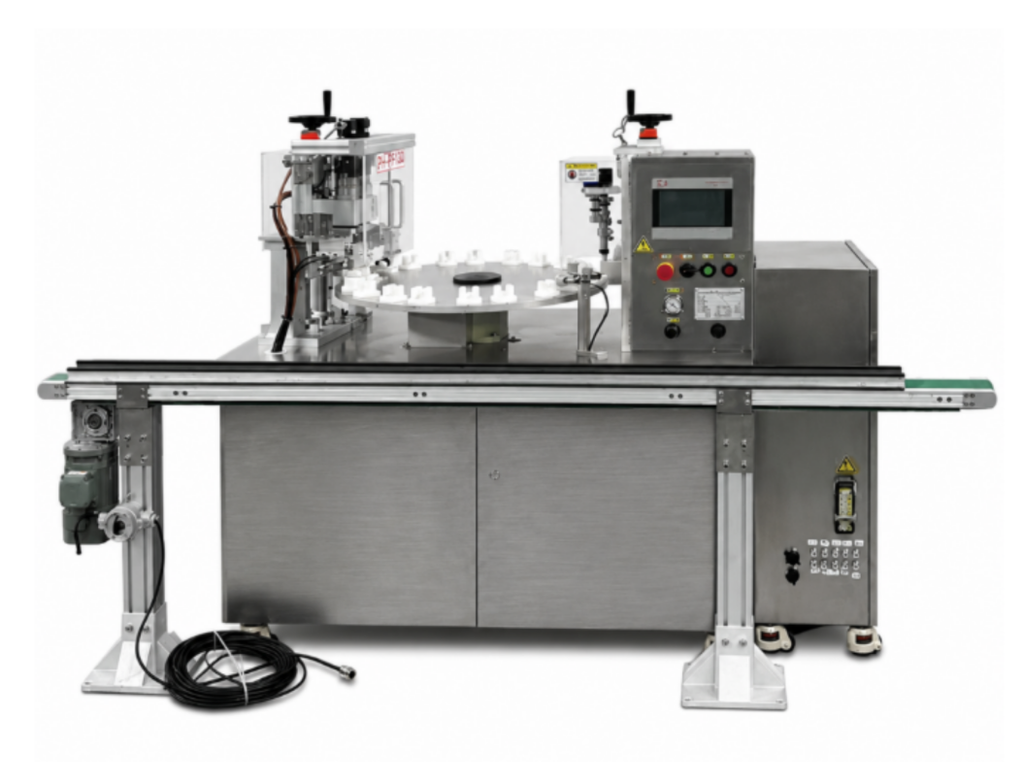
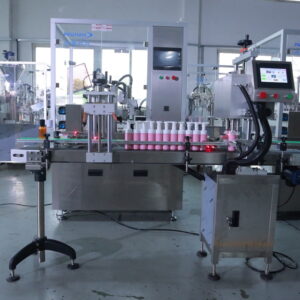
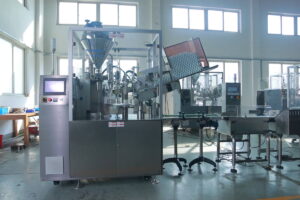
The Baohan Technology PH-PF130 Perfume Filling Machine features a two-station filling configuration. The first station performs basic metered filling using a piston-type filling mechanism, while the second station employs a vacuum-assisted filling method to further refine the filling process.
This combination of processes can improve liquid filling performance according to product requirements and help control fill volume and liquid level.
The equipment features a workflow consisting of manual bottle loading, automatic filling, manual cap placement, and automatic capping. It is suitable for products ranging from 3 to 300 grams, with a maximum production speed of approximately 2,400 bottles per hour.
It is important to note that the actual filling results also depend on the perfume formulation, bottle design, and specific process conditions; therefore, testing with the actual product should be conducted before selecting a model.
III. How Should You Select the Right Perfume Filling Equipment?
When selecting equipment, perfume manufacturers must first determine the bottle capacity, neck design, and packaging method. Different bottle types may require different positioning and clamping configurations; equipment should not be selected based solely on product capacity.
Second, equipment speed should be determined based on production scale. If a company primarily handles small-batch, multi-variety orders, it should focus on the ease of switching between different product specifications; if it primarily engages in stable, high-volume production, it should prioritize the equipment’s continuous operation capability and production cycle time.
In addition, attention must be paid to the capping method after filling, bottle protection, and equipment cleaning and maintenance requirements.
Summary:
Perfume products have high requirements for filling volume and packaging quality, and selecting the appropriate filling process helps improve production consistency. Baohan Technology’s PH-PF130 offers equipment options for perfumes and related liquid cosmetics through a two-station filling process that combines piston-type and vacuum-based filling.
 Baohan Technology Development (Shanghai) Co., Ltd.